
Carrollton Garage Door Guide
What That Noise Actually Means
Carrollton homes built between 1967 and 2003 develop specific door noises as original hardware ages. Here's what each sound means and what to check first.
- Licensed & Insured
- Same-Area Service Calls
- Upfront Pricing
The Common Mistake
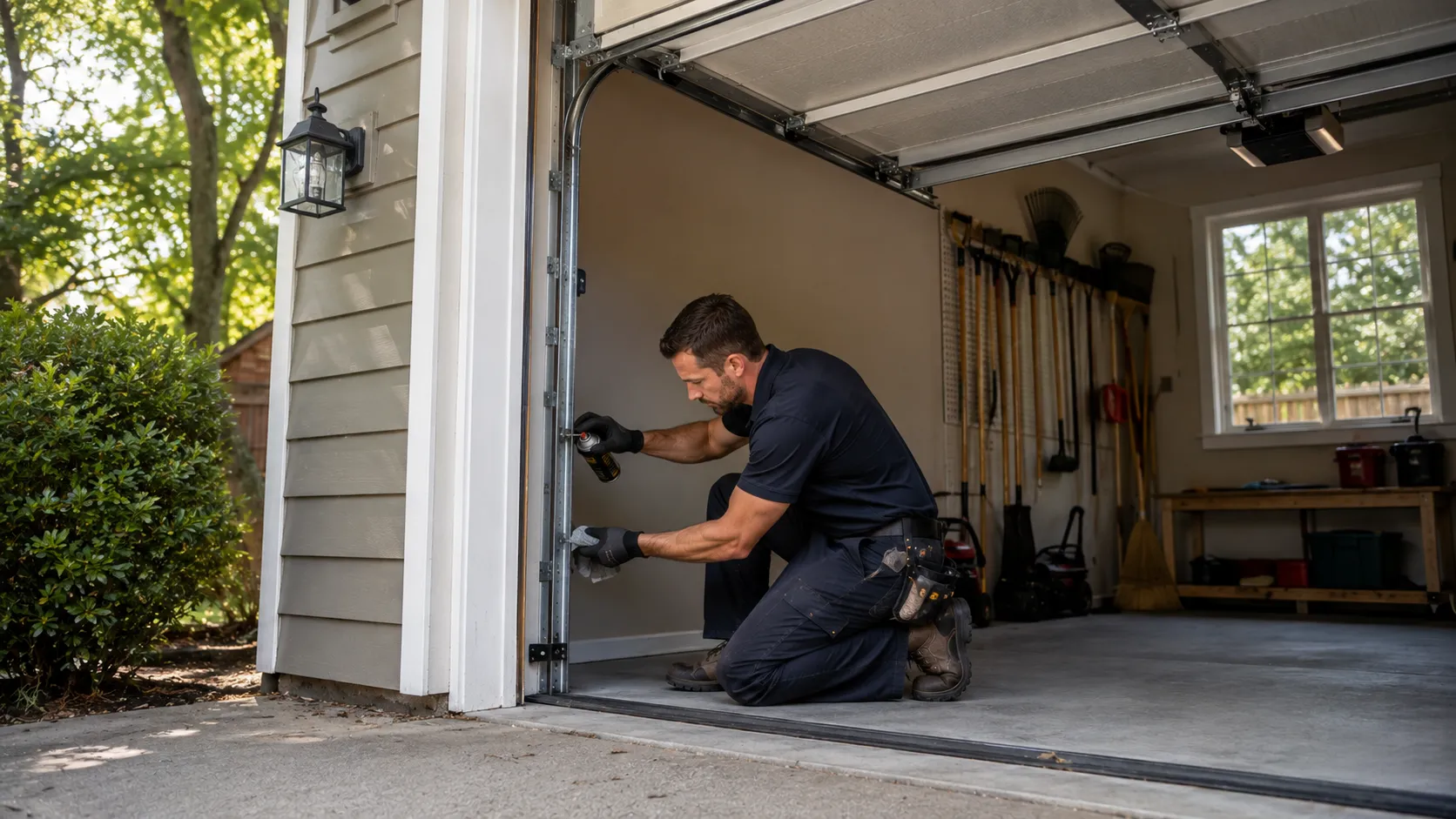
Most people spray the whole door with lubricant the second it starts squeaking and call it fixed. Around Carrollton that habit causes more harm than good, because a lot of the housing stock here dates to 1967 through 2003, with the bulk of it going up in the 1980s and 90s. Doors from that era usually run on galvanized torsion springs and steel rollers that were never sealed units - they were built to be serviced, not sprayed once and ignored.
Dousing the whole assembly in general-purpose oil doesn't fix a worn roller or a spring losing tension, it just masks the sound for a week or two while grease collects road dust and grit off the track. Then the noise comes back, usually worse, and now the track is gummed up too. The mistake isn't caring about the noise.
It's treating every noise the same way, when a rattle, a grind, and a bang are three different problems with three different fixes, and on a door pushing thirty or forty years old, guessing wrong wastes a service call.
What Local Conditions Do
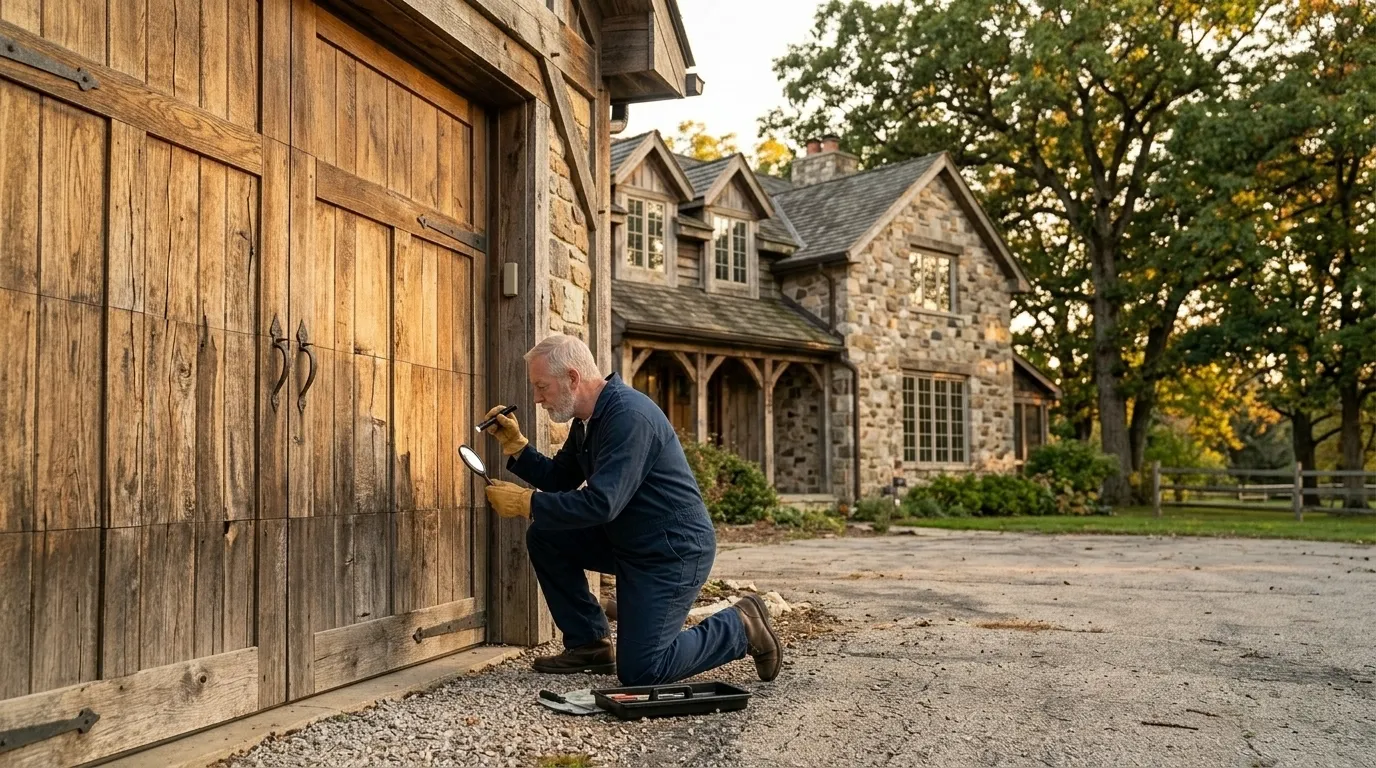
Carrollton sits in a cold-moderate climate band, which means the door hardware here goes through real temperature swings across the year rather than staying in one narrow range. That matters for steel components specifically: torsion springs contract in cold snaps and expand back as temperatures climb, and over a few decades that cycle work-hardens the coils and changes how the spring sounds under load. A door that was silent in July can start groaning in January purely from that metal fatigue, not from anything you did wrong.
Houses built in the 1980s and 90s across this area typically have the original torsion hardware still in place if nobody's swapped it, so that spring has been through several decades of seasonal cycling already. Track alignment drifts the same way - wood jambs shrink and swell with humidity and cold, and a track bolted to a jamb that's moved slightly will produce a new noise that wasn't there when the house was newer. None of this is unique to any one house.
It's what happens to steel and wood over thirty-plus years in a climate that actually gets cold.
The Problem
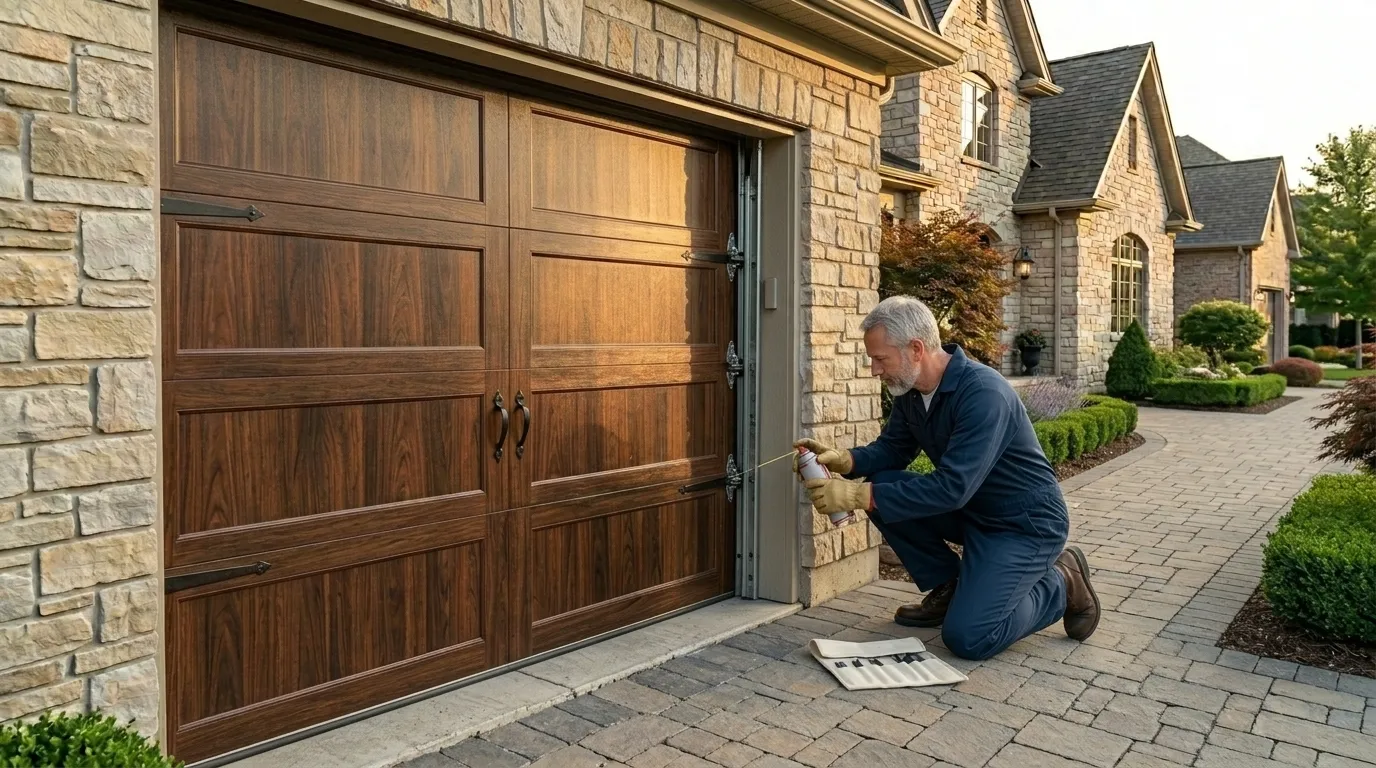
On a door from the 1980s or 90s stock common across this area, three noises show up more than any others, and they point to three different parts. A rhythmic thump once per rotation usually means a flat spot on a roller - steel rollers from that era wear unevenly and you'll feel it in the door's motion as much as hear it. ' A grinding or scraping sound that tracks with the door's travel points to the track itself - bent, or pulled loose from a jamb that's shifted over the decades.
We don't replace a spring on a diagnosis over the phone, and we won't tell you a track adjustment fixes a bad spring just to get a job done faster. Sometimes the honest answer is that a door this age needs more than one part replaced at once, and patching just the noisy part means a second call in a few months.
What to Check
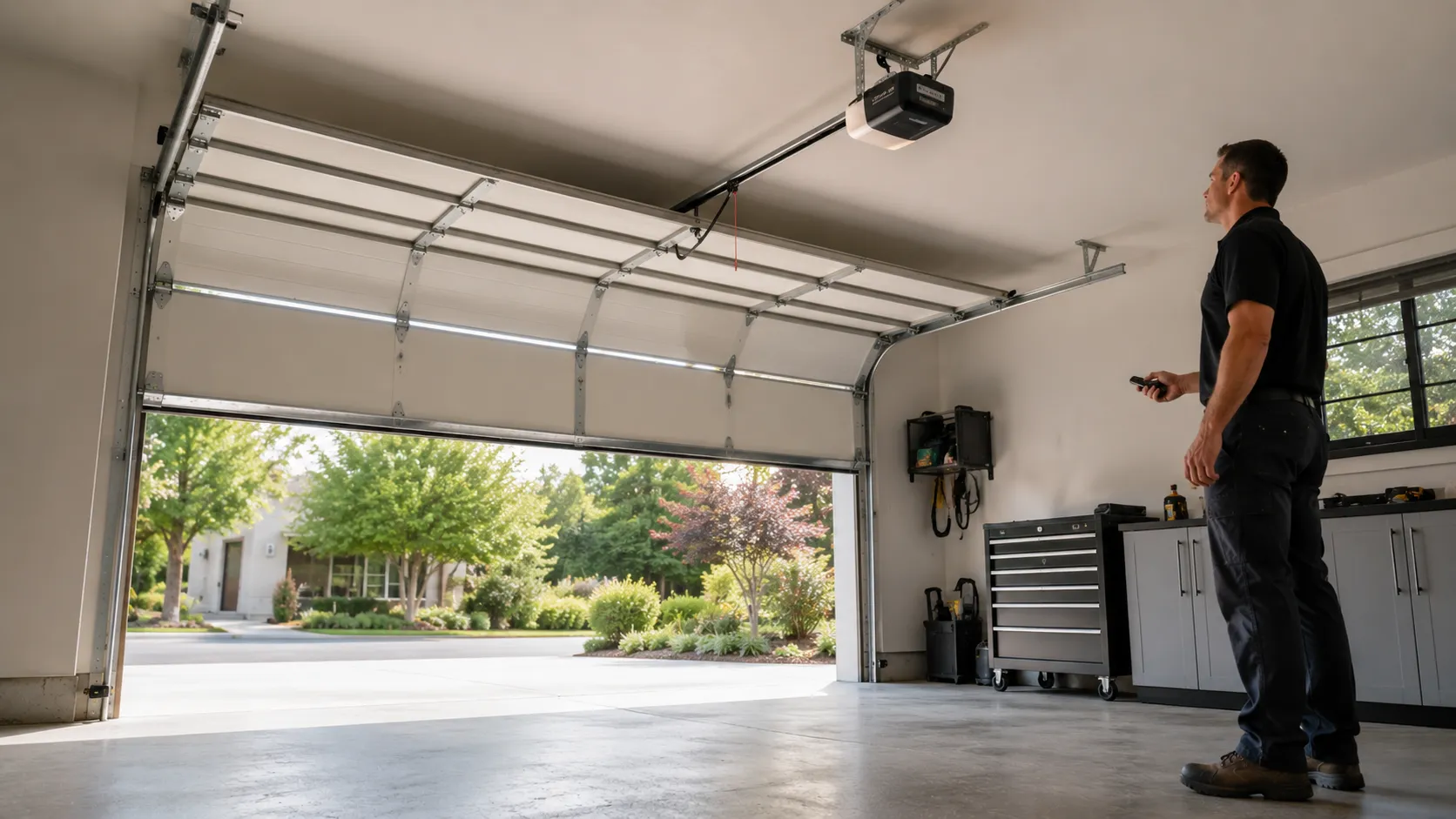
Before you call anyone, open and close the door slowly by hand with the opener disconnected, and listen for where in the travel the noise happens - top, middle, or bottom of the track. That alone tells you roller versus spring versus track. Look at the springs above the door: if you see a gap in the coil or a spring that looks stretched compared to its partner, stop using the opener and don't try to close that gap yourself.
Check the rollers for flat sides or visible rust pitting, common on original steel rollers from 80s and 90s builds that were never swapped to nylon. Run a hand along the track for looseness at the mounting brackets, especially near the jamb, since decades of seasonal wood movement loosens those bolts gradually rather than all at once. What we can't do from a description over the phone is tell you for certain which part has failed - a spring gap and a roller flat can sound almost the same through a closed door, and guessing means a wasted trip either way.
How We Can Help
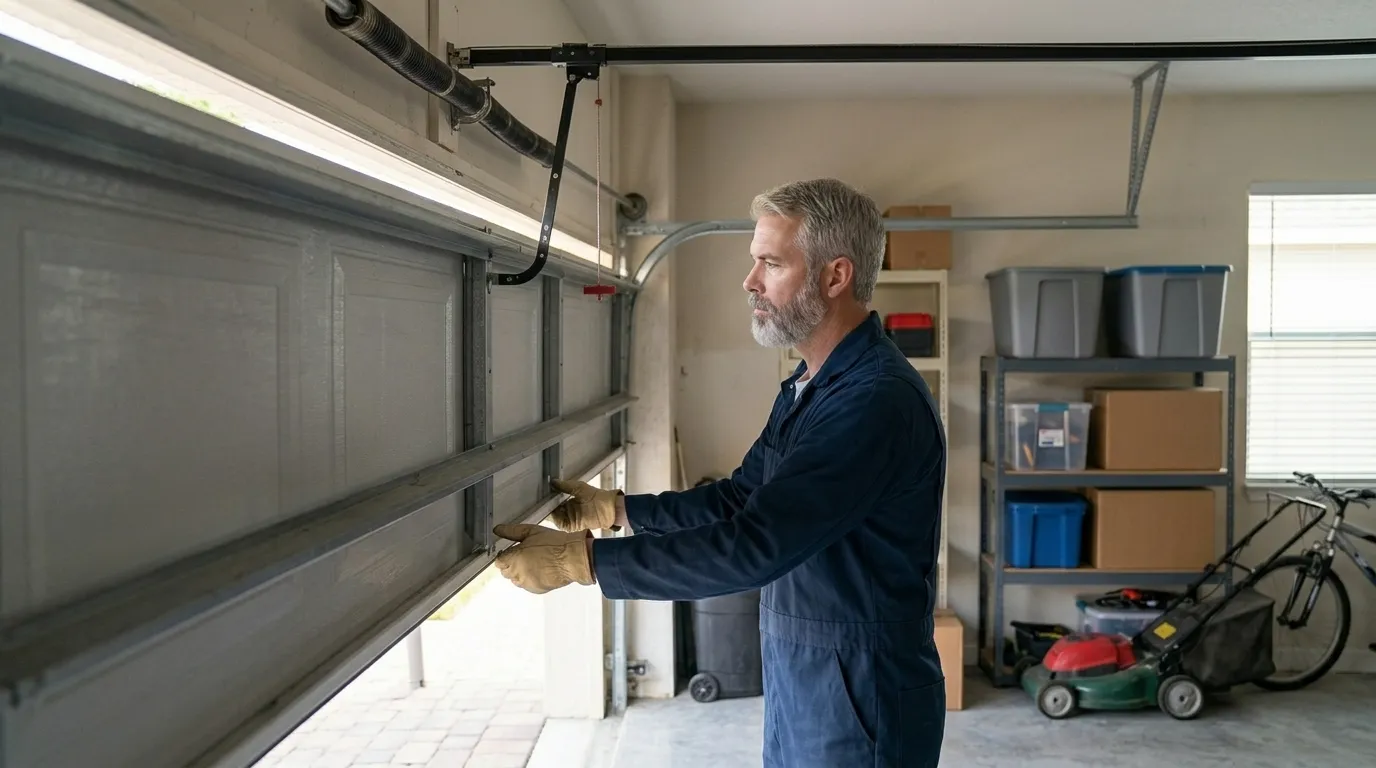
Garage Door Panel Replacement
Dented or cracked panels swapped without replacing the whole door where the frame is sound.
Learn more →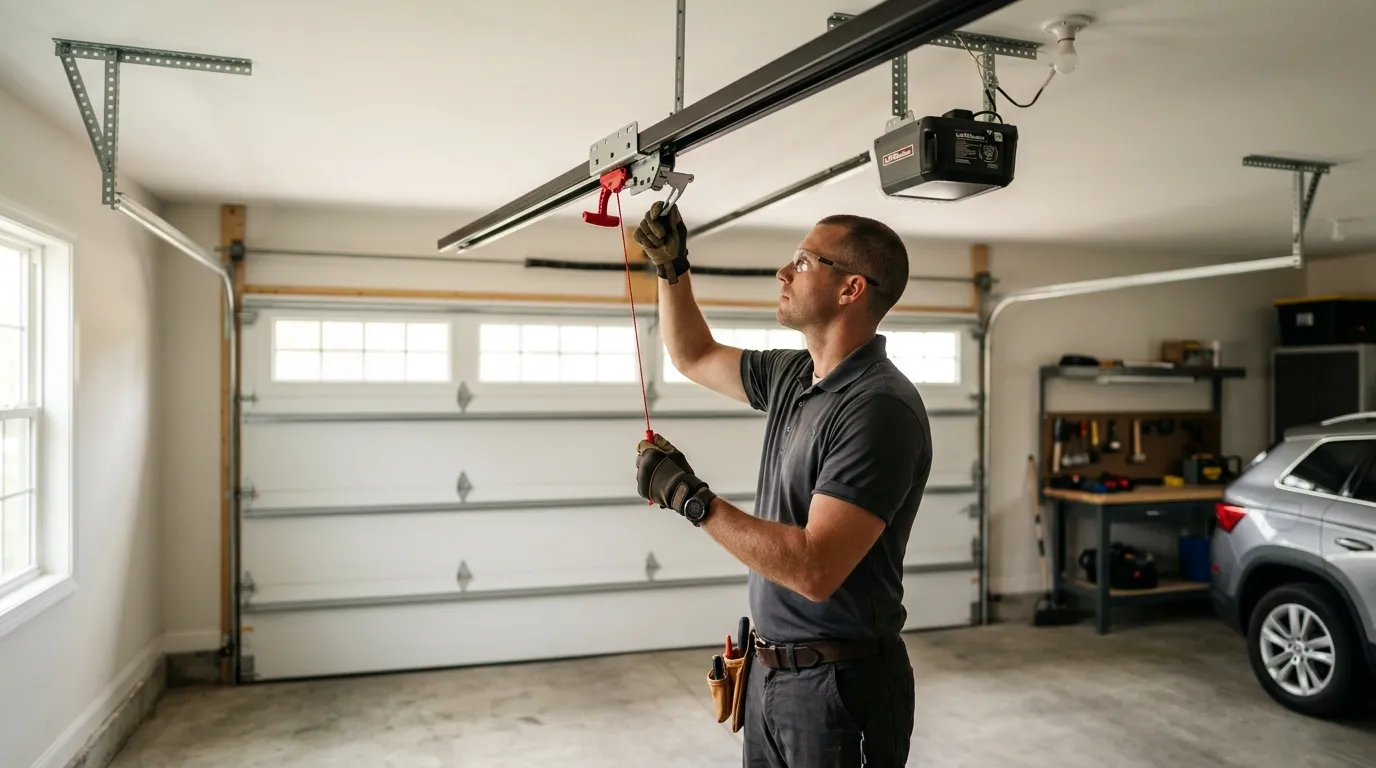
Emergency Garage Door Repair
Emergency Garage Door Repair handled by trained, insured local technicians with upfront pricing.
Learn more →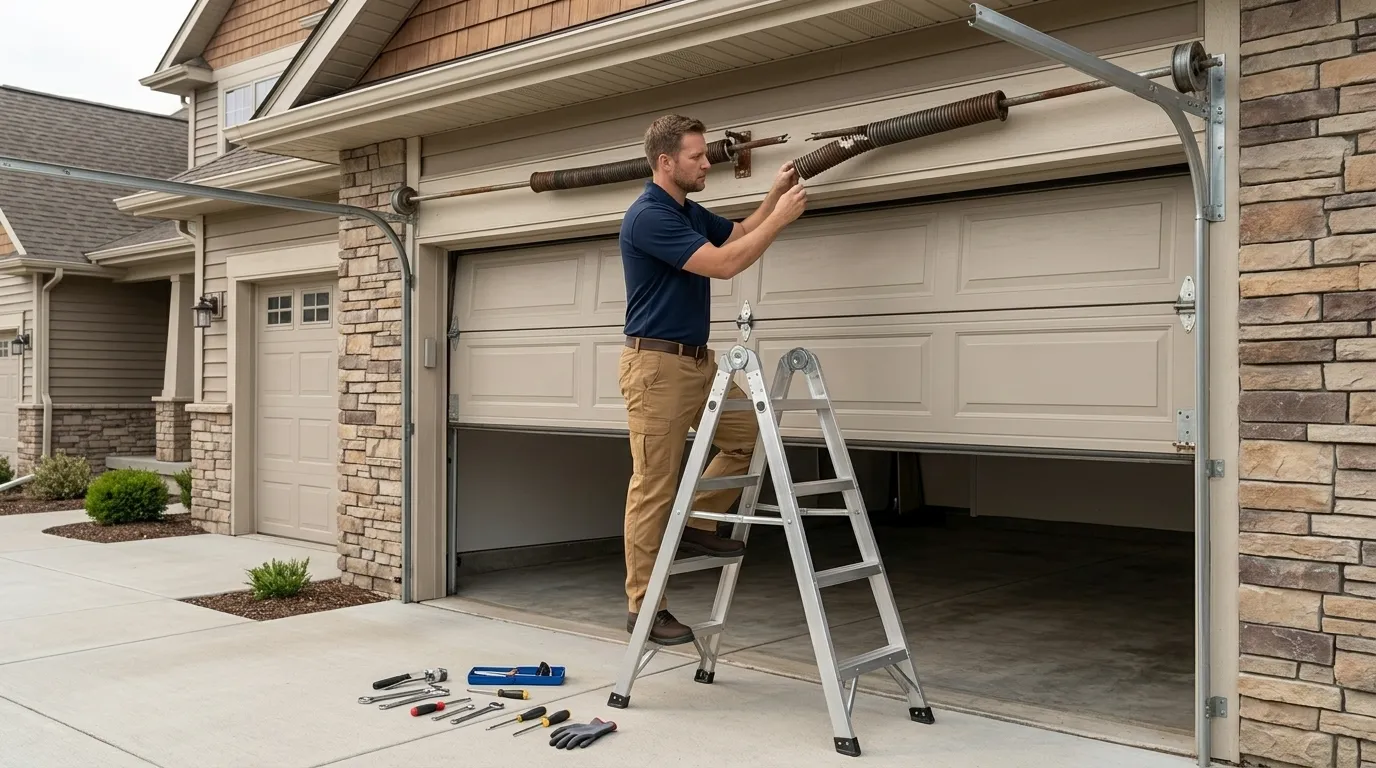
Garage Door Installation
New sectional doors sized and installed for the housing stock actually built in this area.
Learn more →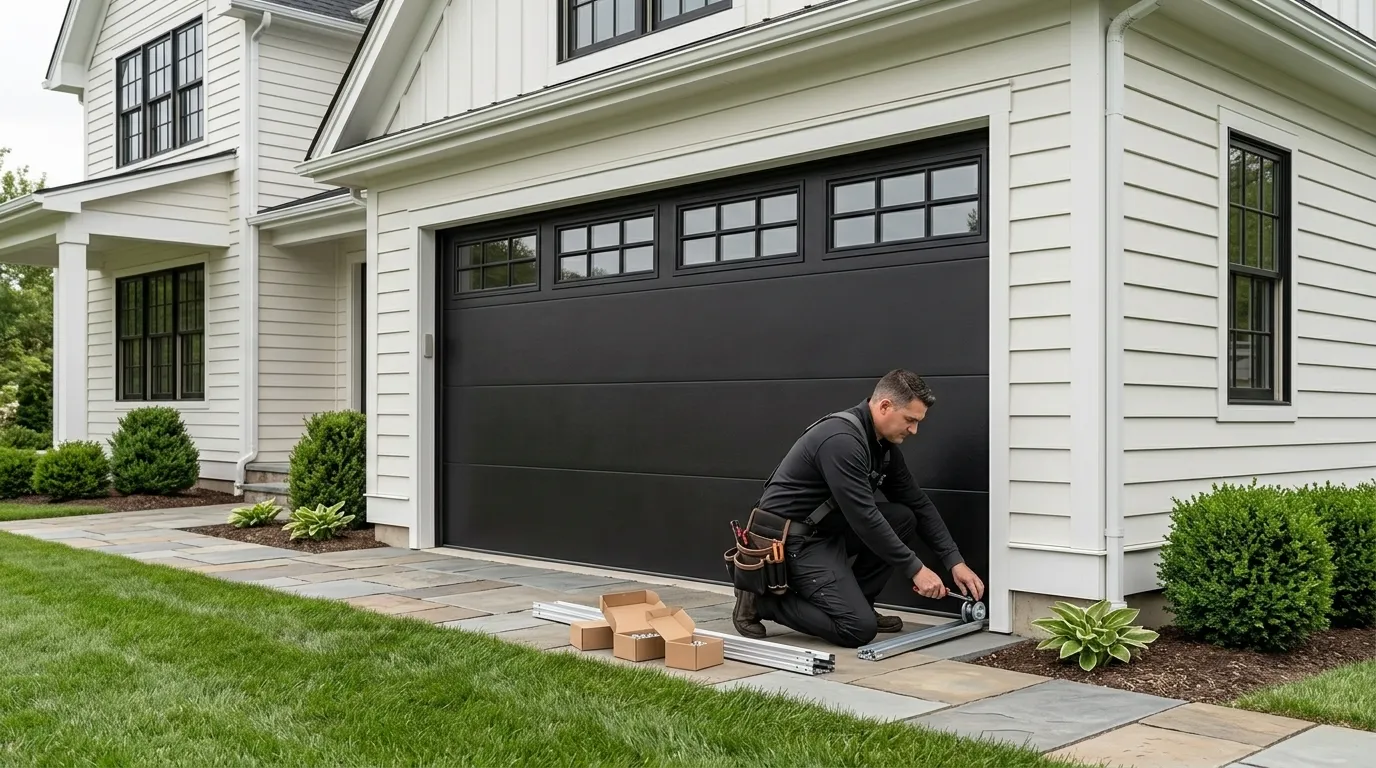
Garage Door Roller Replacement
Worn, noisy rollers swapped for smooth nylon ones so the door runs quiet.
Learn more →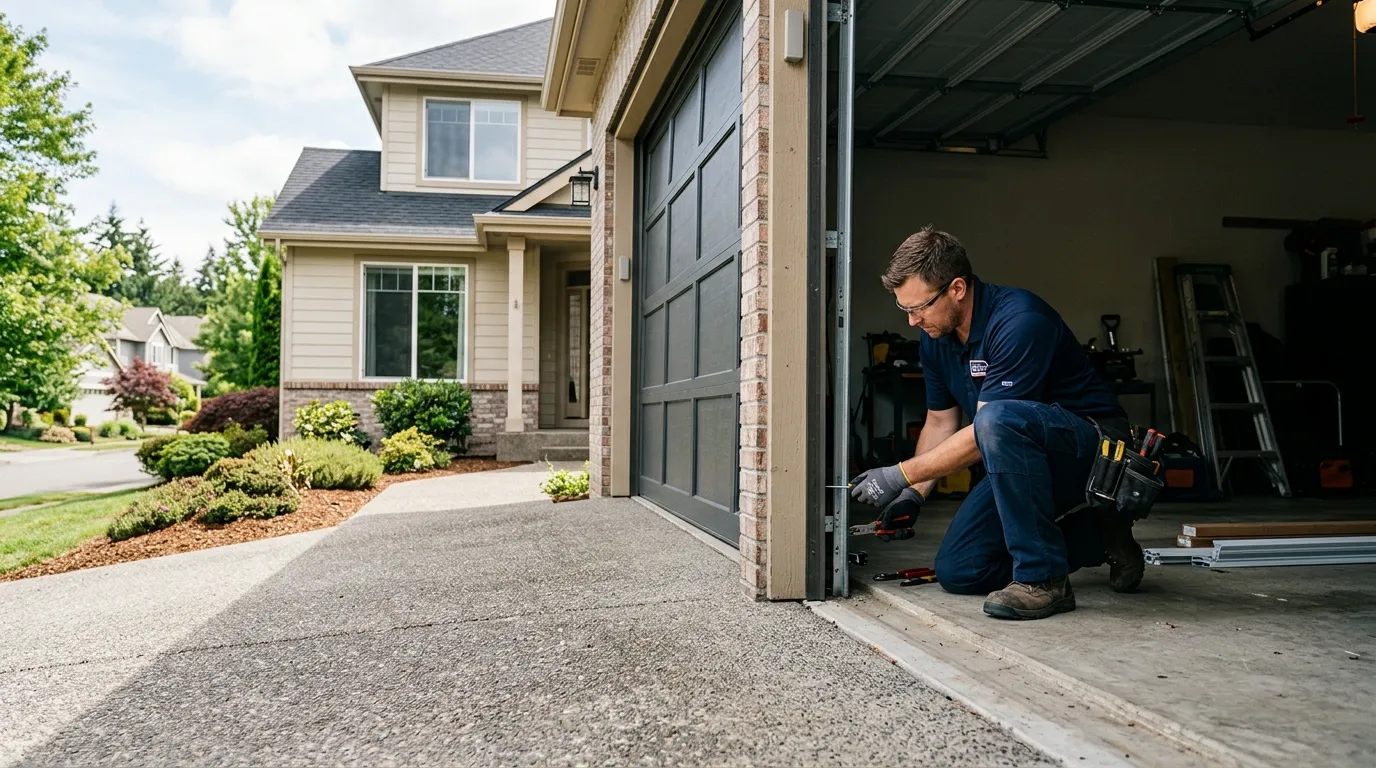
Garage Door Repair
Springs, cables, tracks, rollers, and openers fixed by a tech who explains the problem before touching anything.
Learn more →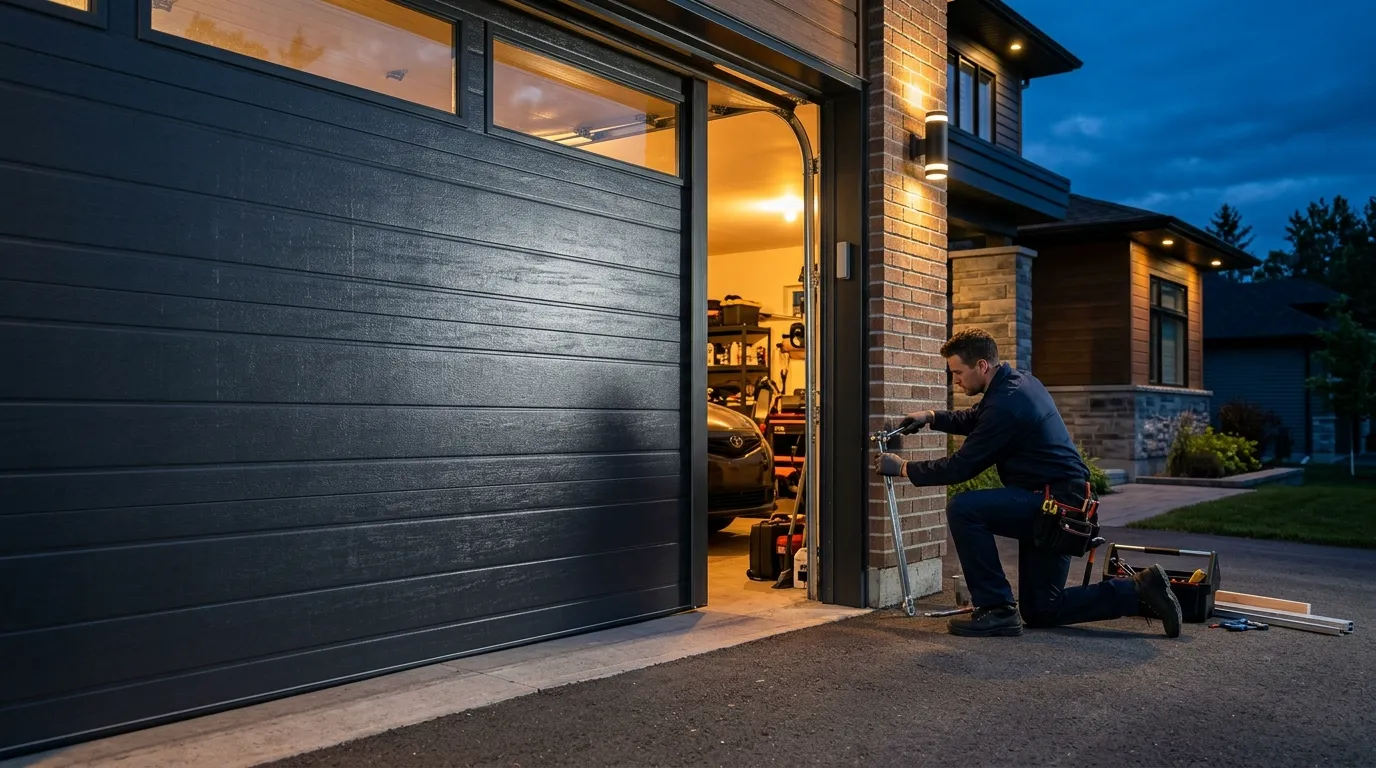
Garage Door Service
Tune-ups, lubrication, and safety checks that catch a small problem before it becomes a service call.
Learn more →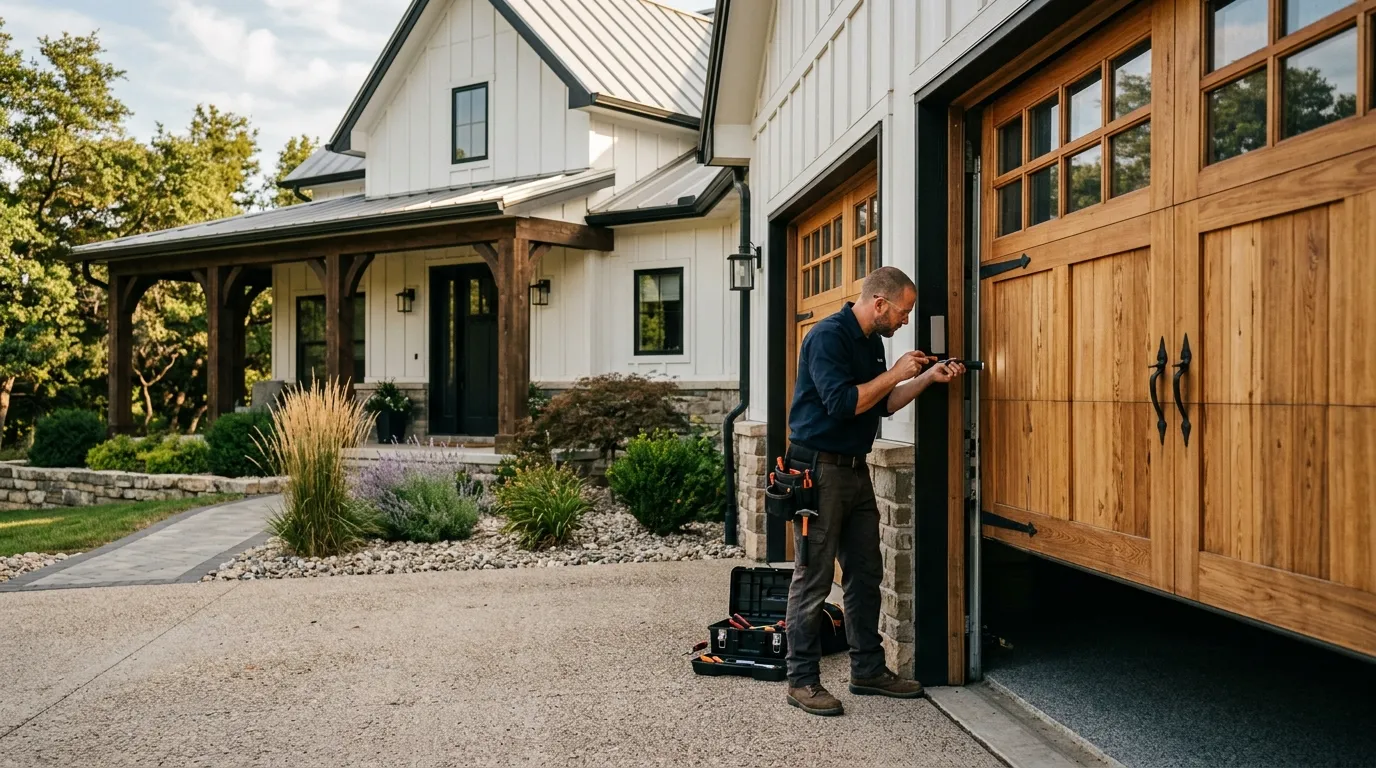
Garage Door Opener Repair
Openers that hum, stall, or reverse - diagnosed and fixed, from worn gears to logic boards.
Learn more →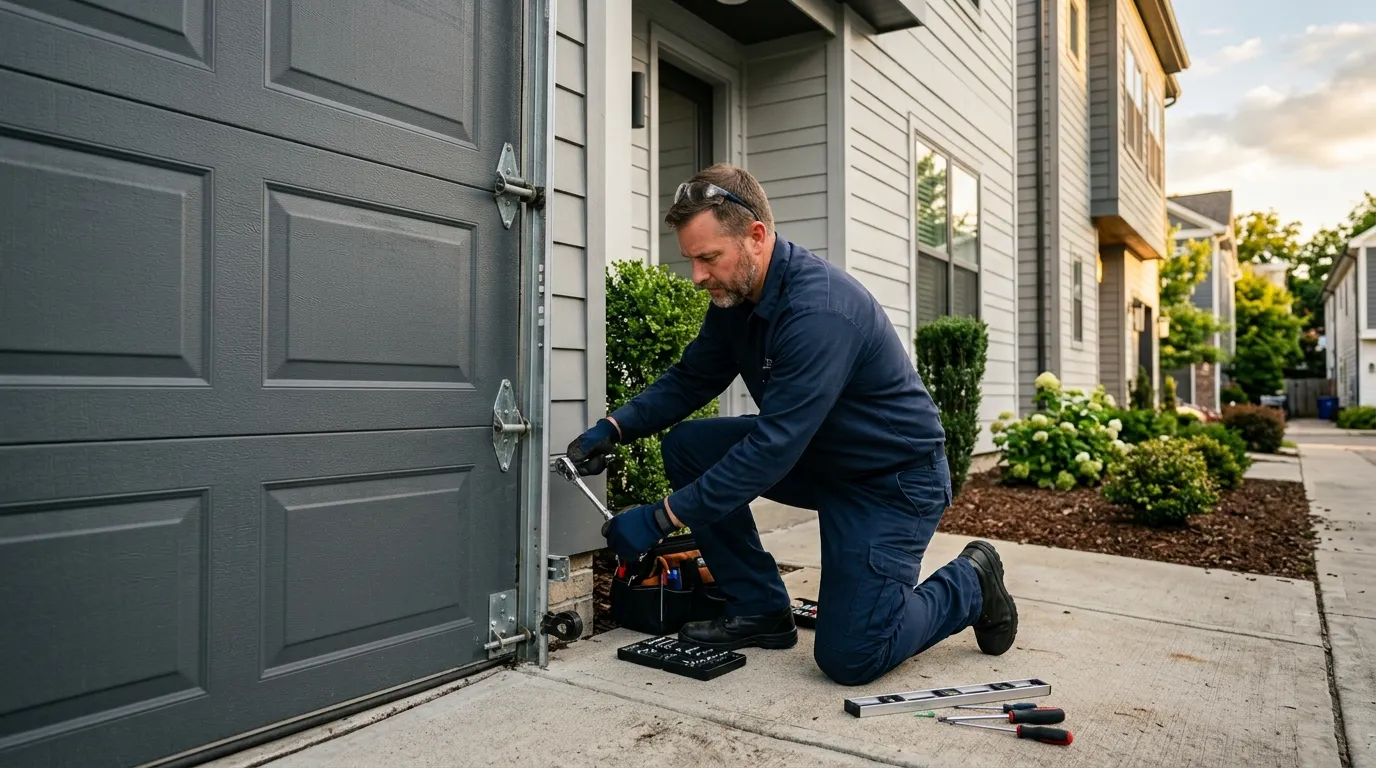
Garage Door Spring Repair
Broken torsion and extension springs replaced and the door rebalanced in the same visit.
Learn more →Frequently Asked Questions
Why does my garage door only make noise in winter?
Cold-moderate climates like this one put real temperature swings on the hardware year to year. Steel torsion springs contract in cold weather and that changes how they sound under load, especially on springs that have already been through years of that seasonal cycling. It's usually the spring or the track mounts, not the opener.
My house was built in the 1980s - is the original hardware still in there?
On a lot of houses built across this area in the 80s and 90s, yes, if nobody's had it replaced. Original torsion springs and steel rollers from that era are well past typical service life, so age-related noise on a house this old is common rather than unusual.
Can I just lubricate the noise away?
Sometimes, if the noise is dry hinges with no other symptoms. But lubricant won't fix a flat-spotted roller or a spring losing tension, and spraying the whole assembly just collects grit on older track hardware. Figure out which part is making the sound first.
Is a loud bang from the garage always the spring?
A single sharp bang followed by a door that won't open is almost always a torsion spring breaking. Don't try to open the door with the opener after that noise - call it in and leave the door where it is.
Have a Door That Needs a Second Opinion?
Call and describe what it is doing - we will tell you what it likely is.