
Service
Garage Door Panel Replacement Serving Carrollton, GA
Carrollton homes built 1967-2003 have steel garage door panels prone to dents, rust, and warp. See why panel damage is common here and when to replace it.
- Licensed & Insured
- Same-Area Service Calls
- Upfront Pricing
What Happens When You Call
-
1
Call or Request a Quote
Tell us what the door is doing and roughly how old the house is - that alone points us toward the likely part before a truck leaves.
-
2
On-Site Diagnosis
A tech checks the spring, cables, tracks, and opener in person and tells you plainly what is actually wrong.
-
3
Straight Price, No Surprises
You get a number before any work starts. It covers parts and labor, nothing added after the fact.
-
4
Fixed the Same Visit
Most repairs are done in one trip. If a part needs sourcing, we tell you that upfront instead of guessing.
Why It Happens Here
Most of the housing across the Carrollton service area went up between 1967 and 2003, with the median build year landing around 1980. Look at the 11 communities in this area - from Mount Zion out to Buchanan - and the pattern holds: heavy concentrations of 1980s and 90s construction.
That matters for panels because doors from that build wave used thin-gauge steel or aluminum with little to no foam core. There was no reason to spec anything heavier at the time; insulated steel wasn't the standard it is now.
The service area sits in a cold-moderate climate band, which means real freeze-thaw cycling every winter and humidity swings the rest of the year. A bare steel panel with no insulation flexes more with temperature than a modern insulated one, and that flexing is what starts hairline cracks at the seams and lets moisture in behind the paint.
Forty-plus years of that cycle on original hardware is why panel failure shows up as a specific, predictable problem in this area rather than a random one. It's not that Carrollton doors are built worse - it's that a lot of them are simply that old, and the materials of that era weren't made for four decades of service.
How It Shows Up
The most common complaint is a dent that won't pop back - a basketball, a bike handlebar, or a car mirror against a panel with no insulation to give it any rigidity. Once steel that thin dents, it stays dented, and the panel next to it starts to look worse by comparison every year.
Rust is the second pattern, usually starting at the bottom panel where splash-back from the driveway sits against the seam, or along the edges where the factory paint has worn through. On the 1980s and 90s stock common across this area, factory galvanizing was lighter than what's used now, so rust moves faster once it starts.
The third pattern is quieter: a panel that's warped just enough to bind against the track on the way up. Owners often blame the opener or the rollers first, because the door still moves, just roughly.
Pull the panel and you'll usually find it's bowed a few millimeters out of flat - enough to catch, not enough to notice standing in the driveway. Left alone, that bind wears the roller and the track faster than normal use would.
Can You Do This Yourself
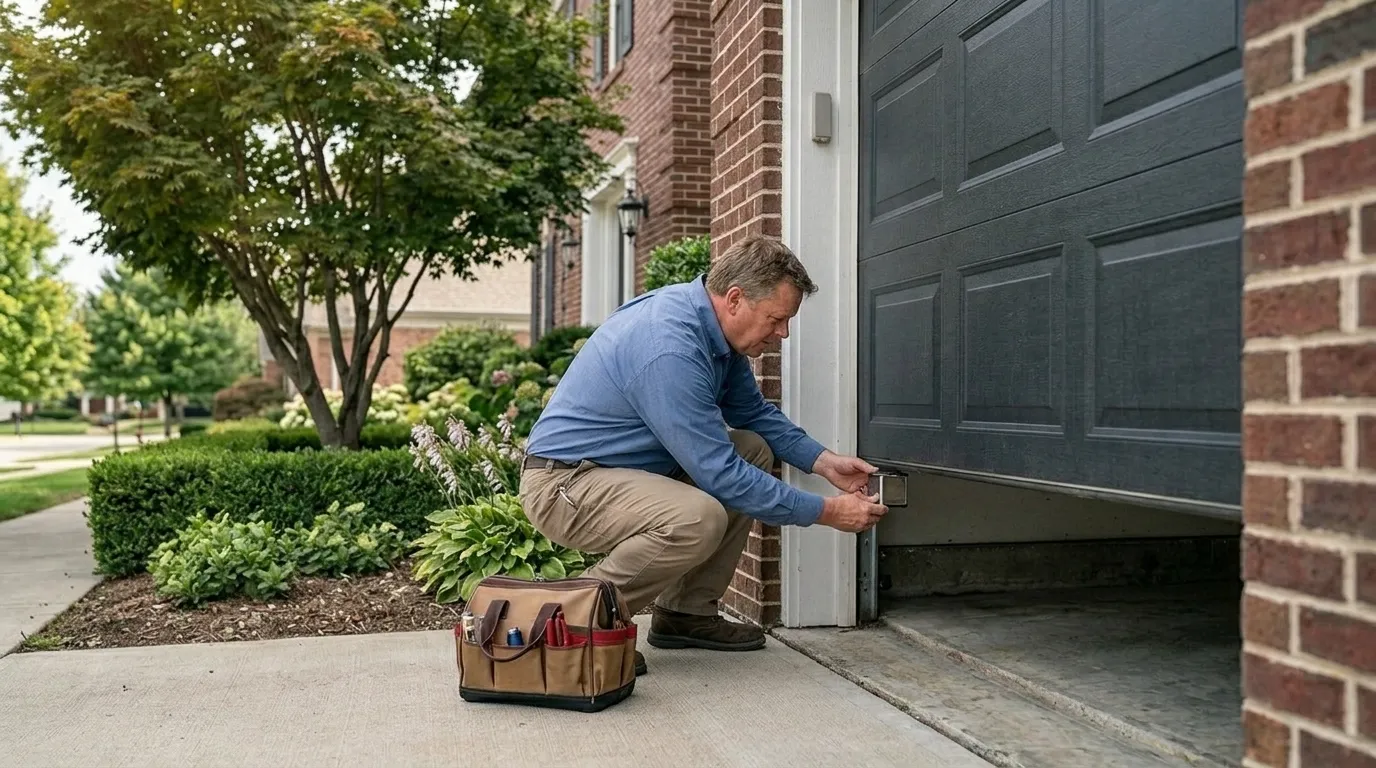
Swapping a single panel is one of the more DIY-friendly garage door jobs, if two things are true: the section is a common size and gauge, and you can source a matching replacement. On newer doors that's often straightforward. On the 1980s and 90s doors that make up most of this area's stock, it's frequently not - profiles, hinge spacing, and panel heights varied more between manufacturers back then, and a lot of those exact models aren't made anymore.
The mechanical part is where it gets risky even when the panel matches. Getting a middle or bottom panel out means disconnecting cables or loosening spring tension to relieve pressure on the section, and a wound torsion spring under load is not a place to improvise. If it's a top panel near the opener arm, there's less tension involved and it's a more reasonable weekend job for someone comfortable with a ratchet and a level.
Our honest limitation: if we can't find a matching panel for your door's age and profile, we'll tell you that up front rather than force a mismatch. At that point full door replacement is usually the better use of your money than chasing a part that doesn't exist anymore.
Where This Job Goes Sideways
The single biggest mistake is ordering a panel by measurement alone. Two doors can be the same width and height and still use different hinge spacing, stile width, or embossment depth. A panel that's close but not exact will fight the track from day one.
Second is color and texture mismatch. Factory finishes fade unevenly over 20-30 years, so even a correct replacement panel from the same manufacturer can look off next to sun-bleached neighbors. That's cosmetic, not structural, but it's worth knowing before you order.
Third, and the one that turns a simple swap into a bigger job: releasing spring tension to pull a panel and finding the springs themselves are original and past their rated cycle count. At that point you're not doing a panel job anymore, you're doing a panel job plus a spring job, and the second part isn't optional once the door is apart.
Last, on doors built before track and hardware were standardized the way they are now, pulling one panel can reveal the whole section run is slightly out of square. Fixing the panel without addressing that just moves the bind to a different spot on the track.
Talk to a Technician Before You Book
Describe what the door is doing and get a straight answer on what it likely needs.
Jobs Like Yours
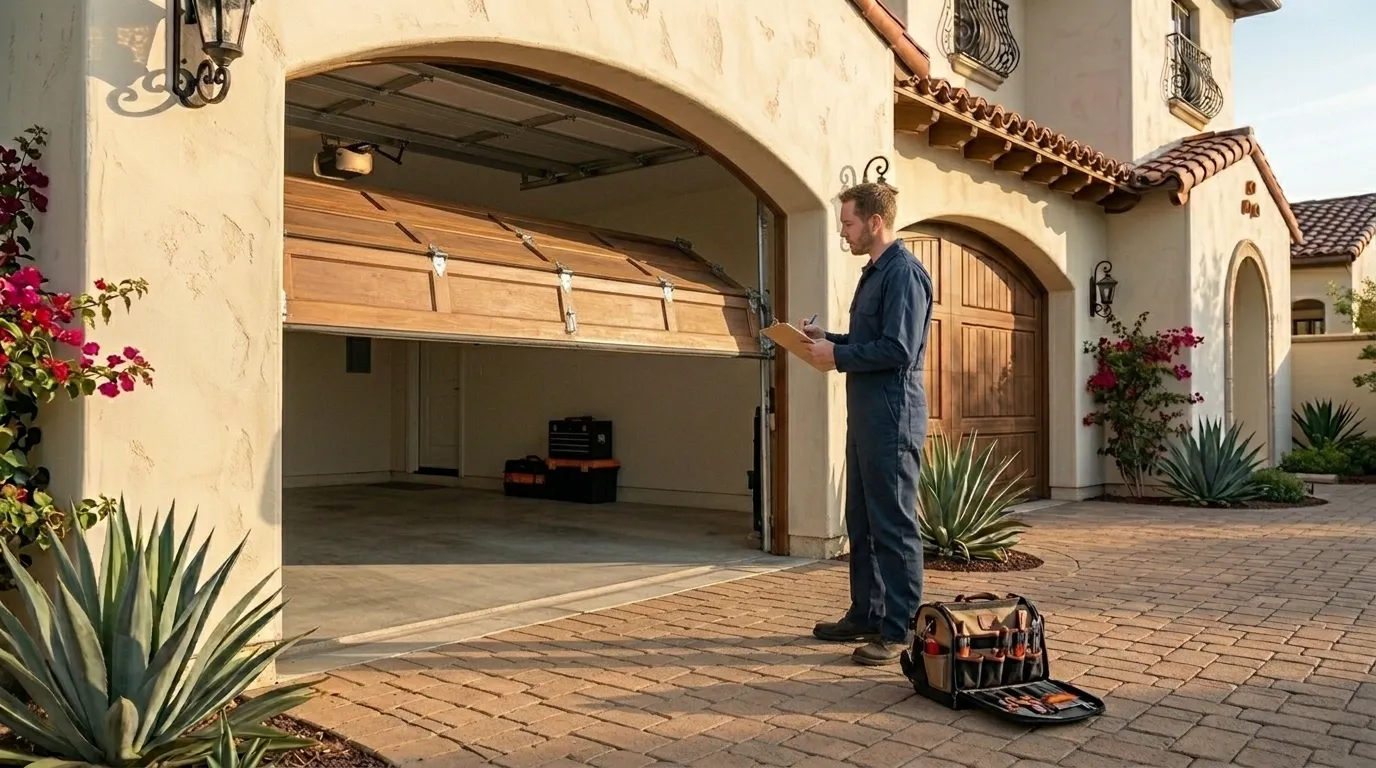
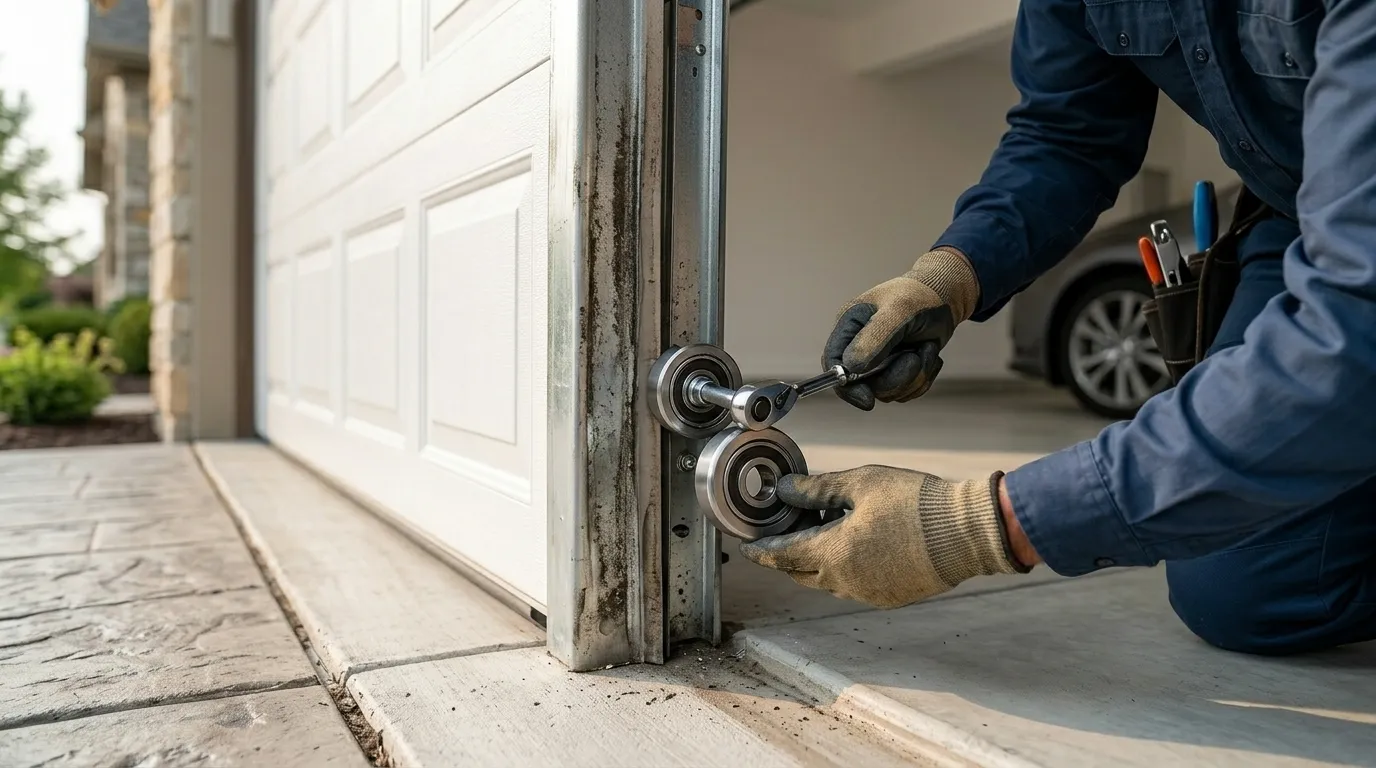
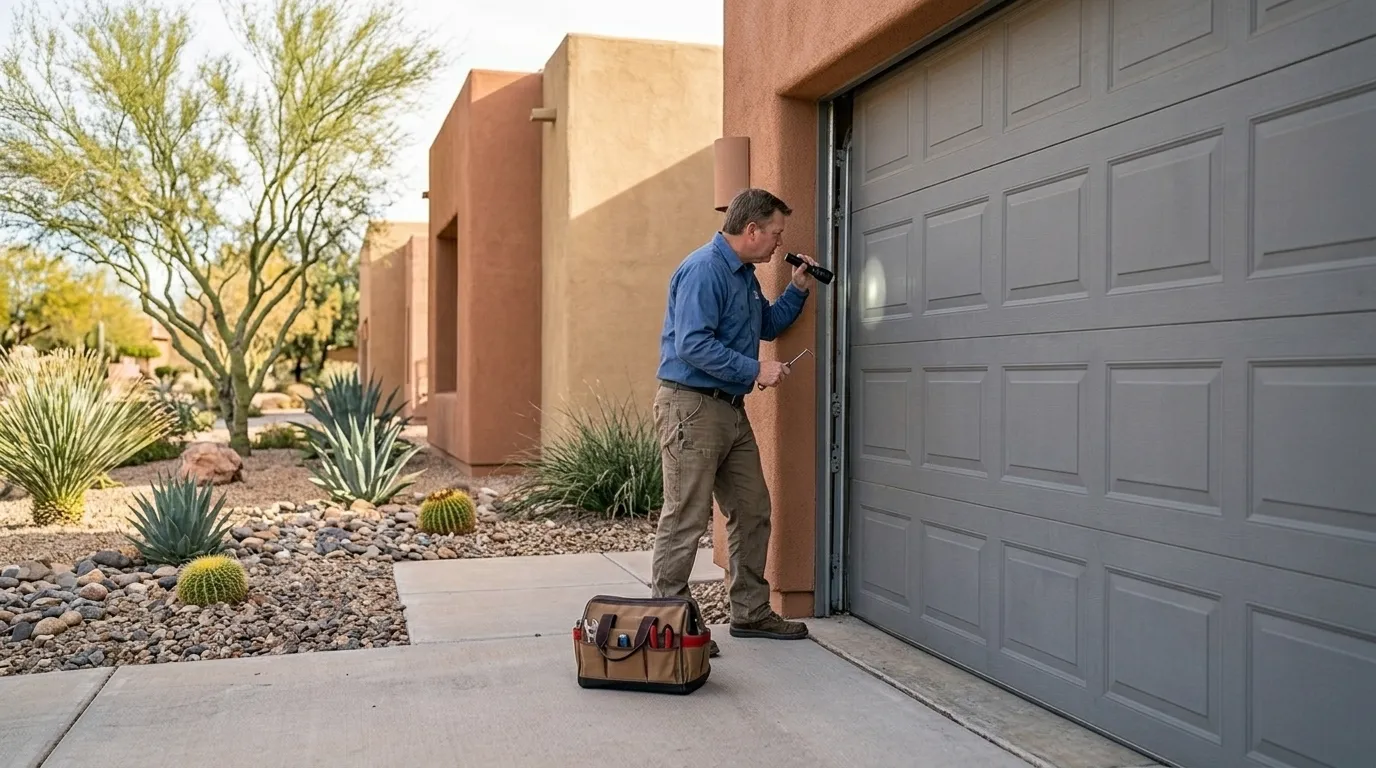
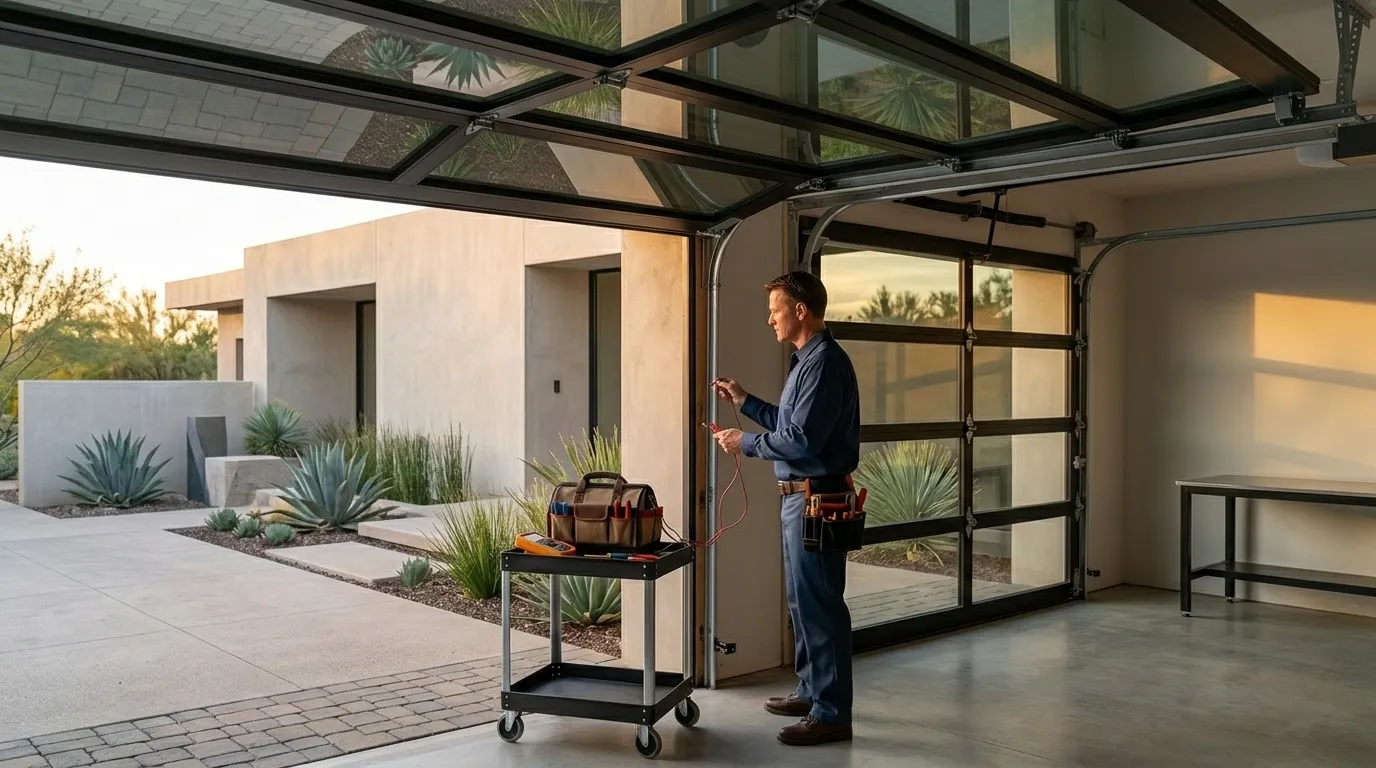
Recent work from this service line.
Why Carrollton Calls Us
Frequently Asked Questions
Can I replace just one panel on my garage door instead of the whole door?
Often yes, if the panel is a common profile and a match is still available. On the 1980s and 90s doors common across this area, matching panels can be hard to source, since a lot of those exact models are discontinued. We check availability before quoting a partial swap versus a full replacement.
Why does my garage door panel keep rusting at the bottom?
Bottom panels take the most splash-back and standing moisture, and factory galvanizing on older stock was lighter than what's used today. Combined with the freeze-thaw cycling in this climate, that seam is usually the first place rust starts and the last place paint holds.
Is it safe to replace a panel myself?
Top panels near the opener arm are usually low-risk. Middle or bottom panels often require relieving spring tension or disconnecting cables first, and a wound torsion spring under load isn't something to improvise. If you're not sure which panel you're dealing with, that's worth a call before you start.
When does it make more sense to replace the whole door instead of one panel?
When a matching panel isn't available for your door's age, when more than one section is damaged, or when pulling a panel reveals the springs or track are already past their service life. At that point patching one panel just delays a bigger job.
Need Garage Door Panel Replacement Serving Carrollton, GA?
Call now for straight answers on cost and timing.